Dogs tend to communicate emotions through body language, and a scared dog may not always bark, growl, or run away. Sometimes dogs communicate fear by trying to make themselves small and get away from a perceived threat, hiding, shaking, lip licking and looking away, lower their bodies and ears, or by being especially quiet. Being able to read the signs can help you help your dog before the situation escalates.
It’s normal for dogs to feel scared when they face a situation they think could hurt them. But extreme fear can influence their behavior and well-being, and veterinary behavior specialists can help. They recommend identifying the trigger, avoiding overwhelming situations, and using behavior modification techniques when needed.
So, why is my dog scared, and what can you do to help?
Let’s discuss the most common signs and causes.
What Does a Scared Dog Look Like?

A scared dog will try to make itself look smaller and get away from the thing causing them fear. Some common signs of a scared dog include:
- Lowering the head or body
- Tucking their tail
- Pinning their ears back
- Avoiding eye contact
- Hiding behind furniture or people
- Shaking or trembling
- Panting or pacing
- Licking their lips constantly
- Yawning when not tired
- Trying to get away or escape
- Freezing up or being stiff
Not all dogs will show the same signs, and some dogs may freeze up while others try to escape. If a dog thinks something is threatening and can’t get away, they may growl, snap, or lunge to put distance between themselves and the perceived threat. Understanding a dog’s body language can help you identify fear before the dog becomes severely anxious or stressed.
Learning what your dog looks like when they’re calm can help you spot the differences when they’re scared.
9 Signs Your Dog Is Scared
1. Your Dog Hides or Avoids You
One of the easiest ways to spot a scared dog is that they hide. They may crawl underneath a table, behind furniture, or into another room, and some dogs will even hide behind you. They may also avoid approaching certain people, animals, or objects. For example, a dog that’s afraid of visitors may run and hide when someone enters the house. Avoid forcing your dog out of a hiding spot, as giving them a reason to escape can cause further distress.
2. Your Dog Is Shaking or Trembling
Shaking is a sign that your dog is scared or stressed. Dogs may shake when they’re afraid of thunderstorms, fireworks, the vet, or car rides, but there are other reasons they could be shaking as well. If your dog is suddenly shaking for no apparent reason, or if they have additional strange symptoms, contact your veterinarian. Trembling and shaking are two of the signs listed by veterinary behavior specialists for fear and stress in dogs.
3. Your Dog Tucks Its Tail
Tucked tail is a sign that dogs use to show that they feel threatened. A scared dog will lower their body to look smaller, and they may tuck their tail between their legs and lower their body. They may also turn their head away and move away from what’s making them scared. Keep in mind that body language should be taken as a whole. Every dog will react to being scared differently, so it’s a good idea to watch for other signs of fear in addition to a tucked tail.
4. Your Dog Pins Its Ears Back
Pinned-back ears are another sign that a dog is scared. You may see this behavior when they see:
- A strange person
- A strange dog
- Loud noises
- Strange environments
- Objects that threaten them
- Or other scary situations.
They may also lower their head and avoid eye contact, and they could lick their lips.
These subtle signs are a good indication of fear since dogs tend to show subtle signs like lip-licking and turning their head away before showing more obvious body language such as growling or running.
5. Your Dog Pants or Paces
Dogs pant for a variety of reasons, including being hot or tired, but they may also pant when they’re stressed. Pacing can be a sign of stress as well. A scared dog may continue to pace back and forth and find it difficult to settle down, or they may stare at the thing making them scared and refuse to leave. If your dog is panting and pacing even when it’s cool out, or if they aren’t hot or tired, consider what might be making them stressed or scared.
6. Your Dog Whines or Barks
Being scared can make dogs more vocal as well, so you may notice that your dog barks, whines, whimpers, or growls when they’re frightened. However, just because a dog barks doesn’t mean that they are aggressive. In fact, some dogs will bark to get away from something that scares them. Understanding this can help you know how to react to a scared dog properly, since you’ll know they aren’t trying to be mean – they’re just trying to get away.
7. Your Dog Refuses Food
A sudden loss of interest in food can also be a sign that your dog is scared. For example, if you normally give your dog a treat and they refuse it, it could be because they’re scared. This is especially true if they associate the treat with something frightening, like a new person or pet in the house. During behavior training, positive reinforcement using food is often used to create associations in dogs’ minds, but dogs who are very scared may not be able to create positive associations. This means that instead of forcing your dog to eat treats, it may be a better idea to simply increase the distance between your dog and the thing making them scared.
8. Your Dog Tries to Escape
Some dogs react to being scared by trying to get as far away from the thing making them scared as possible. Your dog may run into another room, scratch at the door, or try to jump out a window. Or, if you’re walking them, they may pull away from you suddenly and try to get away from the thing that scared them. This is the main reason that fear can be dangerous. Dogs will try to do anything to get away from what’s frightening them, including jumping out of windows. If your dog often tries to escape when they’re scared, be sure to keep windows, doors, fences, and gates secure.
9. Your Dog Freezes or Cowers
Not all dogs run away when they’re scared. Some dogs freeze up and lower their bodies to make themselves look smaller. Your dog may suddenly become motionless and lower their body to the ground, or they may turn their head away and cower. Since dogs that are freezing up often look calm, you may mistake them for being uninterested or passive, but in reality they are incredibly scared and should be given space rather than being confronted. Veterinary behavior specialists say there are four types of fear-related responses: fight (growling/lunging), flight (running away), freeze (stiffening up), and fidget (moving around nervously).
Why Is My Dog Scared?
There are plenty of reasons why a dog becomes frightened. Common things that scare dogs include loud noises, thunderstorms, fireworks, strange people, strange dogs, new environments, the vet, and grooming. Dogs can also become scared of things after a frightening experience, so it’s a good idea to keep an eye on your dog for any changes in behavior.
Why Is My Dog Suddenly Scared?
If your dog was fine before but has suddenly become frightened, it’s a good idea to figure out what might have changed.
Ask yourself questions like:
- Did something change at home?
- Has your dog had a frightening experience?
- Is there a new person or animal around?
- Did your dog’s schedule change?
- Is your dog afraid of a certain sound?
- Does your dog become scared somewhere specific?
- Are there other strange behaviors happening?
Sudden changes in fear levels can sometimes be caused by health issues, especially in elderly or senior dogs, so it’s always a good idea to speak with your veterinarian if your dog starts having strange fears.
What Can Make a Dog Scared?
Loud Noises
Thunderstorms, fireworks, construction, traffic, and other sudden noises can frighten dogs. Some dogs will be mildly upset and hide or pant, while some dogs will become extremely agitated and attempt to escape.
Strangers
Some dogs get nervous around unfamiliar people. Rather than forcing your dog to meet new people, keep your dog at a safe distance.
Other Dogs
Some dogs become frightened around unfamiliar dogs. Watch your dog’s body language and keep them away from other dogs if they become scared.
New Places
Moving, visiting a new place, or entering a new building or room can be scary for some dogs. Make sure you give your dog time to explore new places at a comfortable pace.
How to Help a Scared Dog Feel Safe
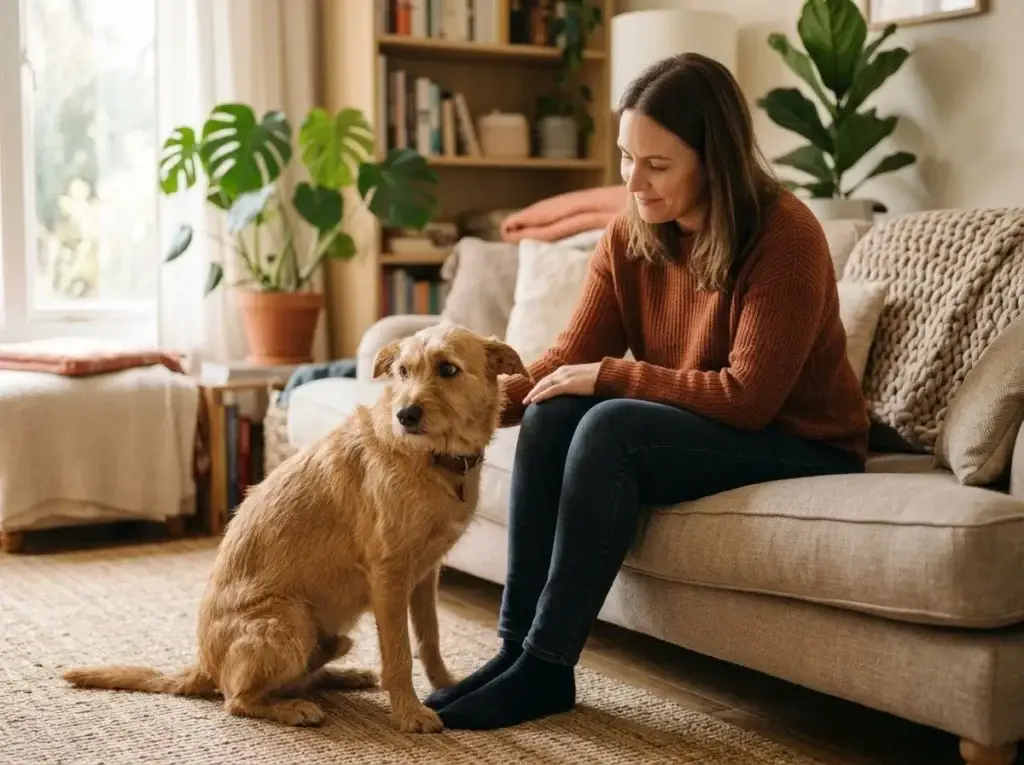
If your dog is scared, your main goal should be to remove the source of their fear.
Give Your Dog Space
Don’t force your scared dog to confront or interact with a person, animal, or object. If you can, try to increase the distance between your dog and the thing making them scared, and give them space to feel safe.
Create a Safe Place
Make sure your dog has a safe, secure area they can retreat to when they’re feeling frightened. This could be a quiet room, a crate if they’re comfortable with one, or even another area they feel safe sleeping in.
Keep a Predictable Routine
Try to keep feeding, playing, and sleeping times relatively consistent so your dog knows what to expect each day.
Using Positive Reinforcement
Positive reinforcement training can help your dog create positive associations with scary things. But if your dog is extremely scared, this may not be effective. For more serious fears, counterconditioning and desensitization may be a good option, but they should be done carefully and often with the help of a professional.
Never Punish Fear
Never punish, scold, or hit your dog for being scared, since this can cause your dog to associate the person punishing them with the thing that frightened them, and it can cause your dog to associate being punished with being scared.
How to Calm a Scared Dog
When your dog becomes scared, try to stay calm and minimize their stress.
You can:
- Move your dog away from the thing making them scared.
- Give your dog a quiet, safe place to be.
- Stay calm yourself.
- Avoid forcing your dog to do anything.
- Keep gates, doors, and windows secure if your dog tries to get away.
- Wait until your dog has calmed down before trying to do anything else.
If your dog is too scared to eat treats, don’t force them to.
For serious fears, desensitization and counterconditioning with a professional may be a good option, since it can help your dog learn to associate the thing making them scared with something positive. But it’s important to avoid overwhelming your dog, since doing so can intensify their fear.
Can a Scared Dog Try to Run Away?
Yes, Dogs often try to get away from things they’re scared of. This is especially common during thunderstorms, fireworks, or other loud noises.
Make sure your environment is secure, and keep an eye out for:
- Gates
- Fences
- Doors
- Windows
- Outdoor enclosures
- Collars and leashes
If your dog regularly tries to escape when they’re scared, it’s important to identify the reason behind their fear in addition to making sure their environment is secure.
When Should You Get Professional Help?
Some dog fears can be managed, but severe or persistent fears need to be addressed with a professional. Contact your veterinarian if:
- Your dog has suddenly developed a fear.
- Their fear is becoming more persistent or severe.
- Your dog tries to escape often.
- Your dog refuses to eat in certain situations.
- Your dog becomes aggressive when they’re scared.
- Your dog seems physically ill or in pain.
- Their fear is impacting their ability to function.
- You can’t figure out what’s causing your dog’s fear.
A veterinarian can help you determine if there’s an underlying medical issue, and they can help you develop a behavior modification plan. Severe fears often require desensitization and counterconditioning, which should always be done with a professional.
Final Thoughts
A scared dog is a dog that’s communicating their emotions through body language and behavior. They could be hiding, shaking, tucking their tail, pinning their ears back, pacing, refusing treats, freezing up, or trying to get away. The best thing you can do is identify the thing that’s making them scared, give them space, provide a safe place to retreat, and avoid punishing or punishing them for being scared. Mild fears can usually be resolved through positive reinforcement training, but severe or sudden fears should always be addressed with a veterinarian or professional.
Frequently Asked Questions About Scared Dogs
Why is my dog suddenly scared?
There are many possible reasons for sudden fear, including a frightening experience, a new trigger, or an underlying medical issue. If the fear is sudden or persistent, speak to your veterinarian.
How do I calm a scared dog?
Move your dog away from the thing making them scared when possible, and give them a safe space to retreat to. Avoid punishing or punishing your dog for being scared, and consider using positive reinforcement training or desensitization techniques with a professional.
Can a scared dog become aggressive?
Yes, Dogs that are scared may growl, snap, or lunge to try to put distance between themselves and the thing they're scared of. Never punish a scared dog, since this can cause the dog to associate the punishment with something frightening.
Should I punish my dog for being scared?
No. Never punish your dog for being scared, since this can often cause them to associate the punishment with being scared. Instead, use positive reinforcement training or work with a professional to help your dog overcome their fear.